

📝 Disclaimer: The content on this site is for informational and educational purposes only and does not constitute professional advice. Always practice proper safety measures when camping and using outdoor gear.
* This post may contain affiliate links. As an Amazon Associate, we earn from qualifying purchases at no extra cost to you.
* This site uses AI technology for content assistance and illustrative imagery. Images are for demonstration purposes and do not depict real people or events.
Understanding the Tackle Box as an Organized Fishing Space
A fishing tackle box is a portable storage container associated with angling equipment and small accessories. Its layout refers to the arrangement of compartments, trays, pockets, or open storage areas used to separate visible categories of gear.
The phrase describes organization rather than a fishing technique. A box may contain sections for hooks, sinkers, swivels, lures, line materials, tools, or other compact items. The exact contents vary with the fishing setting, personal habits, local water, and type of angling vocabulary in use.
Common Layout Features
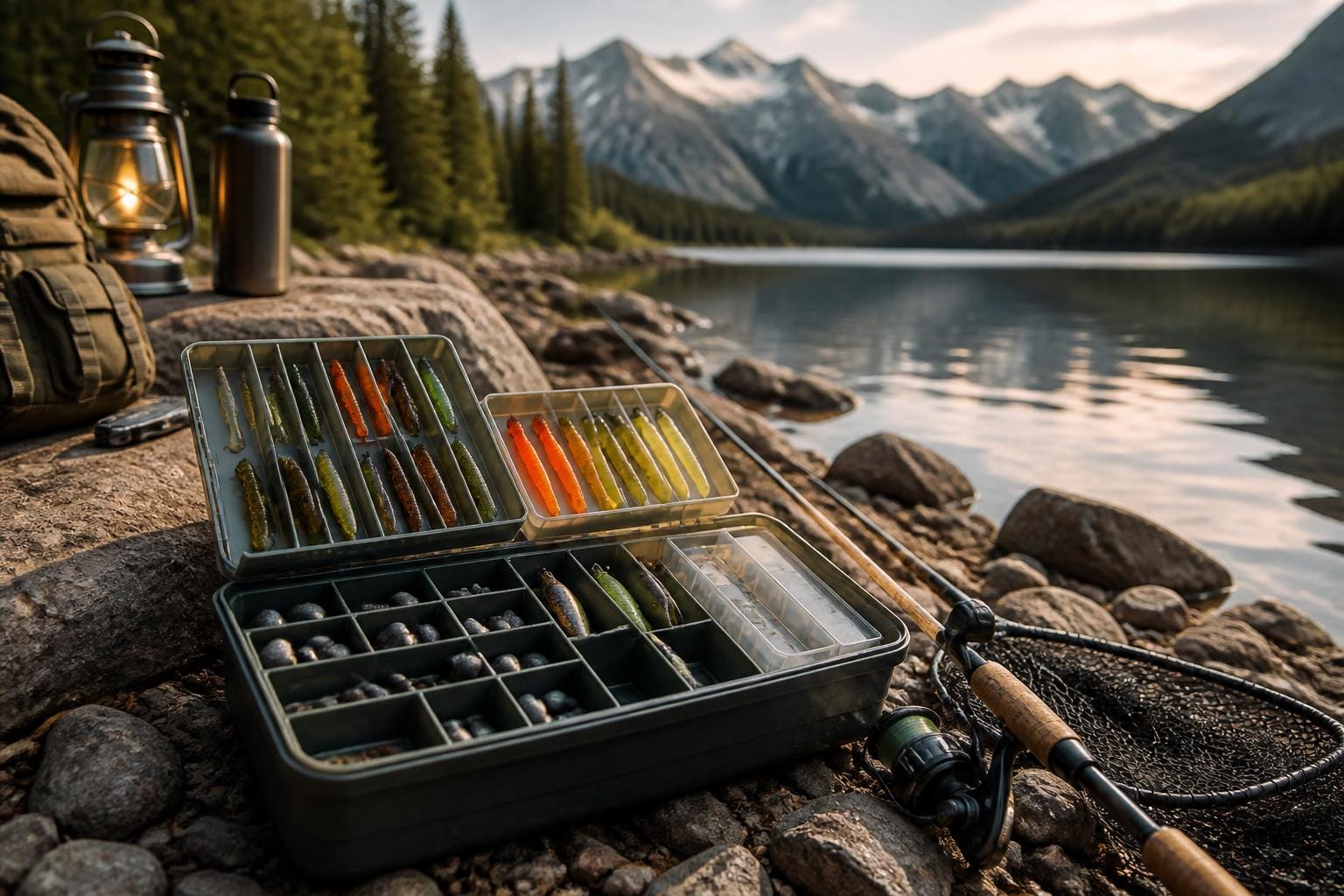
Many tackle boxes use removable trays with divided compartments. These sections create visual separation between small pieces that might otherwise become mixed together. Larger containers can include deep lower storage for reels, spools, tools, or packaged items, while smaller cases may focus on compact terminal tackle.
Soft-sided tackle bags use zippered pockets, internal sleeves, and removable storage boxes. Their layout language often emphasizes portability and flexible access rather than rigid tray structures. Backpacks and chest packs represent related storage categories, with space organized around movement along a shoreline, from a boat, or during other forms of waterside recreation.
Transparent lids, labeled compartments, and contrasting materials can make the contents easier to identify at a glance. These features are descriptive characteristics of storage design, not indicators of fishing effectiveness.
How Anglers Describe Box Organization
Tackle box layout vocabulary often includes terms such as compartment, divider, tray, insert, pocket, sleeve, case, and storage bin. “Terminal tackle” commonly refers to small items located near the end of a fishing line, including hooks, swivels, sinkers, and leader materials. “Hard baits,” “soft lures,” and “accessories” describe broader groupings that may appear in separate sections.
A layout can also reflect the difference between frequently visible items and reserve materials. Open trays provide a clear view of contents, while closed pouches or deeper sections create a less visible storage area. In angling culture, this arrangement is often discussed as part of personal gear organization, preparation habits, and the visual character of a fishing outing.
Observational Points in Tackle Storage Language
- Divided tray: A removable or built-in section that separates small fishing items into individual spaces.
- Terminal tackle compartment: A storage area associated with hooks, weights, swivels, leaders, and related line-end components.
- Lure section: A space commonly associated with artificial presentation items, with shapes and materials varying across tackle categories.
- Tool pocket: A compartment linked with pliers, cutters, measuring items, or other compact accessories.
- Soft tackle bag: A fabric-based container that often uses zippered sections and removable boxes rather than fixed trays.
- Labeling system: Written or visual identifiers that describe the contents of a compartment without indicating a particular fishing method.
- Open storage: A visible area where larger equipment or loose accessories can be seen without removing an insert.
- Waterside portability: A general storage quality associated with carrying equipment between a vehicle, shoreline, dock, boat, or recreation area.
Layout, Setting, and Angling Culture
The appearance of a tackle box can reflect the setting in which it is used. Shoreline anglers may be associated with compact cases or soft bags, while boat-based storage can include larger containers and deeper compartments. Family recreation, youth programs, and casual fishing events may feature simple organizers with clearly separated spaces, while experienced anglers may use highly individualized layouts.
Environmental conditions also influence the language surrounding storage. Moisture, mud, sand, changing light, and limited space are common parts of waterside descriptions, though a tackle box layout alone does not reveal how the equipment will be used. Conservation discussions may appear alongside tackle storage when anglers distinguish reusable items, discarded line, or general shoreline cleanliness.
A tackle box layout is therefore best understood as a visual and practical vocabulary for organizing fishing equipment. It connects storage design, angling habits, and waterside atmosphere without defining a specific technique or guaranteeing a particular result.