

📝 Disclaimer: The content on this site is for informational and educational purposes only and does not constitute professional advice. Always practice proper safety measures when camping and using outdoor gear.
* This post may contain affiliate links. As an Amazon Associate, we earn from qualifying purchases at no extra cost to you.
* This site uses AI technology for content assistance and illustrative imagery. Images are for demonstration purposes and do not depict real people or events.
Understanding Tire Pressure Language in Camping
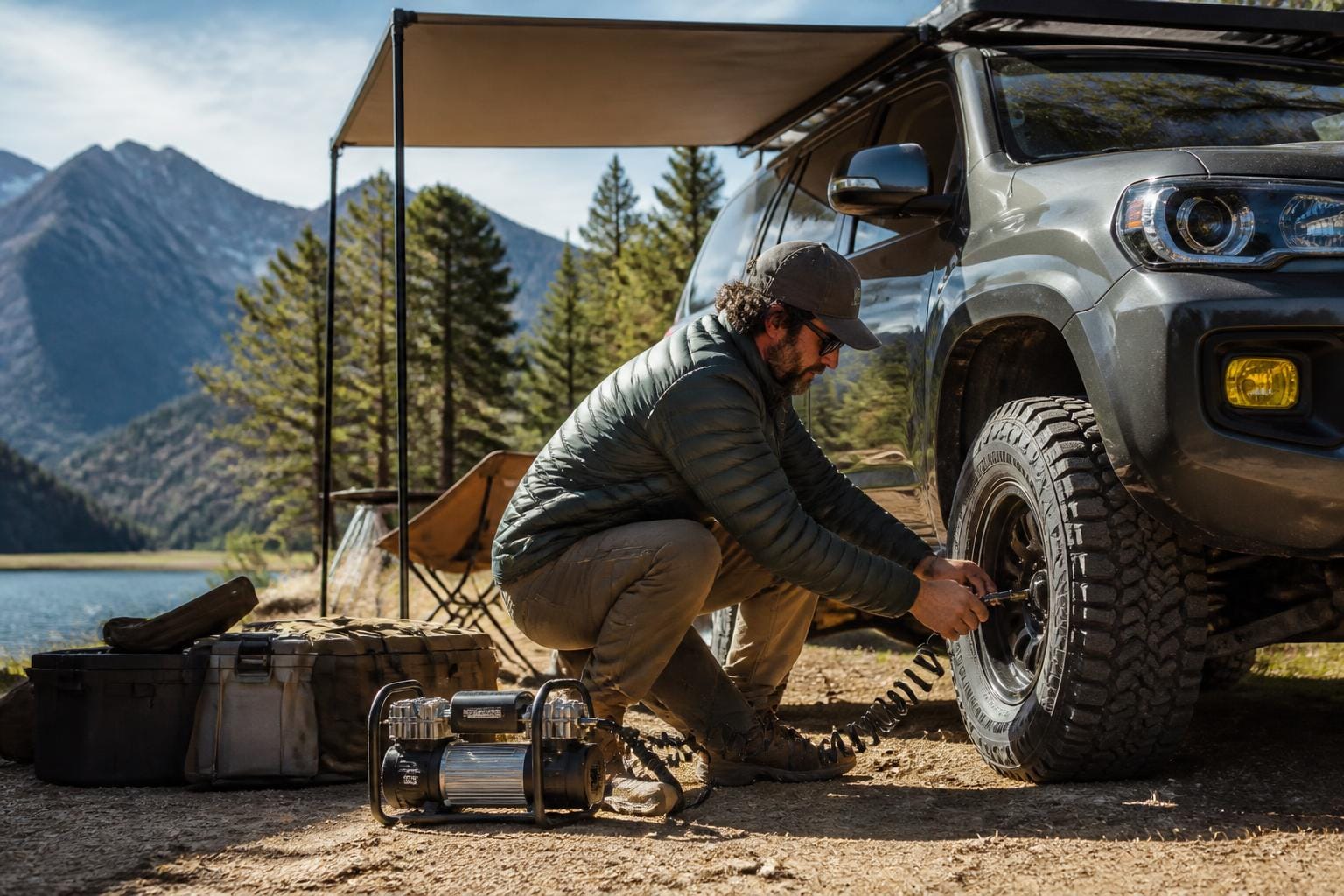
Camping tire pressure terminology describes the vocabulary used when discussing the air condition of vehicle tires in outdoor travel settings. It can appear in conversations about car camping, vans, trailers, gravel access roads, sandy campsites, forest tracks, or vehicles carrying camping equipment.
The phrase does not refer to one universal number or setting. Tire pressure language is connected with the vehicle type, tire design, carried load, road surface, weather, and information provided for that particular vehicle. These details form the background for understanding the terminology without turning it into a fixed instruction.
Common Terms and Their Meanings
Pressure rating refers to a tire’s stated air-pressure range or capacity as described in technical information. It is different from a casual observation such as a tire appearing firm or soft.
Cold tire pressure describes pressure measured before extended driving or after the tire has returned closer to surrounding conditions. Heat from movement can affect the air inside a tire, so “cold” is a descriptive state rather than a reference to outdoor temperature alone.
Load range is language connected with the amount of weight a tire is designed to support within its specifications. In vehicle-camping discussions, this term may appear alongside passengers, equipment, cargo areas, trailers, and roof-mounted items.
Pressure change describes a difference between one reading and another. Temperature shifts, elevation changes, air loss, and recent travel can all appear in discussions of changing pressure, although the term itself does not identify the cause.
Vehicle-Camping and Terrain Context
Camping vehicles often travel across a mixture of paved roads, compacted gravel, loose soil, and uneven access surfaces. These settings create different descriptions of traction, ride feel, vibration, and contact with the ground. Tire pressure terminology is therefore part of a broader vocabulary about vehicle condition and campsite access.
A loaded vehicle may be described in relation to its cargo, passenger space, trailer connection, or storage arrangement. The language remains specific to the vehicle and tire information involved. General outdoor discussions can explain these categories, while exact figures belong to vehicle documentation or professional technical guidance.
Terrain descriptions also influence how people talk about tires. Gravel roads may be associated with dust and vibration, sandy areas with loose surfaces, and muddy ground with reduced firmness underfoot. These observations provide environmental context rather than a universal method for vehicle travel.
Weather, Visibility, and Observed Conditions
Outdoor weather can affect how vehicle equipment is discussed. Cold air, strong sunlight, wet ground, and changing elevation may appear in descriptions of pressure readings or tire appearance. A tire check performed at one time can produce a different reading from one taken after travel or under different surrounding conditions.
Visibility is another part of the terminology. A tire may show visible dust, mud, wetness, tread marks, or surface wear, but visual appearance alone does not explain internal pressure or mechanical condition. In campsite conversations, these observations are often separated from technical measurements.
The surrounding setting also shapes language. A vehicle parked on a level gravel area has a different visual context from one positioned on a sloped forest surface, even when the same tire vocabulary is used.
Terms Often Connected With the Topic
- Cold reading: A pressure measurement associated with a tire that has not recently been warmed by extended movement.
- Load information: Descriptive details relating to occupants, camping cargo, trailers, and the vehicle’s stated carrying limits.
- Tire placard: A vehicle information label that may list manufacturer-provided tire and pressure details.
- Tread: The patterned outer portion of a tire that contacts the ground and can collect dust, mud, or small stones.
- Terrain surface: The visible ground condition, such as pavement, gravel, sand, compact soil, or wet earth.
- Pressure gauge: A measurement device commonly mentioned in technical discussions of tire air pressure, without implying a particular model or procedure.
- Temperature effect: The general relationship between surrounding or travel-related heat and changes in a pressure reading.
- Vehicle load: The combined presence of passengers, equipment, supplies, and other carried items within the vehicle system.
Why the Vocabulary Matters
Clear terminology separates visual observations from technical information. Words such as load range, cold reading, tread, and pressure change describe different aspects of a vehicle and its tires, even though they may appear together in camping conversations.
The language also helps distinguish ordinary campsite atmosphere from vehicle-specific technical details. A gravel parking area, a dusty tire sidewall, or a heavily equipped van belongs to the visible camping environment; exact pressure figures and mechanical interpretations belong to the vehicle’s documentation or qualified technical sources.
Camping tire pressure terminology is therefore best understood as a vocabulary bridge between outdoor travel, vehicle storage, terrain, weather, and tire-related information.